
By D. Brian Smith
Photography: Mecum Auctions
Every August, the Monterey Peninsula becomes the center of the collector-car universe.
For a few glorious days, seemingly every road connecting Monterey, Carmel, Pebble Beach and WeatherTech Raceway Laguna Seca become an impromptu rolling car show. Ferraris mingle with Porsches. Prewar classics cruise alongside modern hypercars. Vintage racers thunder through the hills, and automobiles carrying seven- and eight-figure valuations suddenly seem almost commonplace.
Then there are the muscle cars.
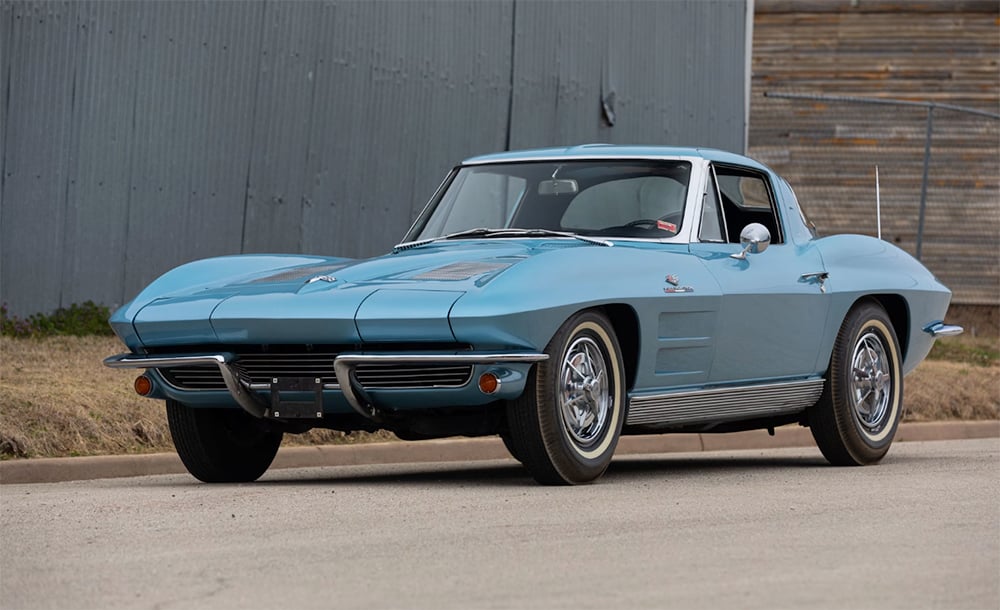
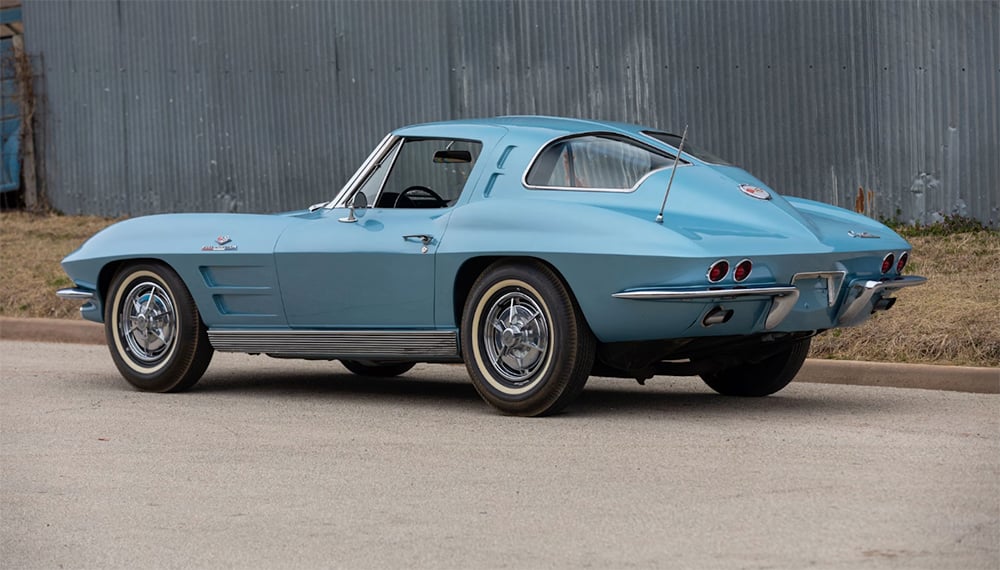
Above and below: 1963 Corvette split-window coupe that included its original Rochester mechanical fuel injection system, currently equipped with a Holley four-barrel carb atop the matching number 327 cubic inch V8.
Give us a thumping big-block, a four-speed shifter poking through the transmission tunnel, a set of Magnum 500s, Rally IIs or SS wheels, and enough carburetion to empty a fuel tank with considerable enthusiasm, and suddenly that multimillion-dollar European exotic across the lawn doesn't have our undivided attention anymore.
Monterey Car Week 2026 gave American muscle enthusiasts plenty to talk about.
And what a Monterey it was.
CLASSIC.COM calculated that 850 automobiles sold across Monterey's five major auctions for approximately $751.3 million, easily eclipsing the previous Monterey record by its methodology. Mecum alone brought 521 lots to Monterey and sold 324 of them for approximately $111.6 million.
Mecum Brings a Detroit Soundtrack to Monterey
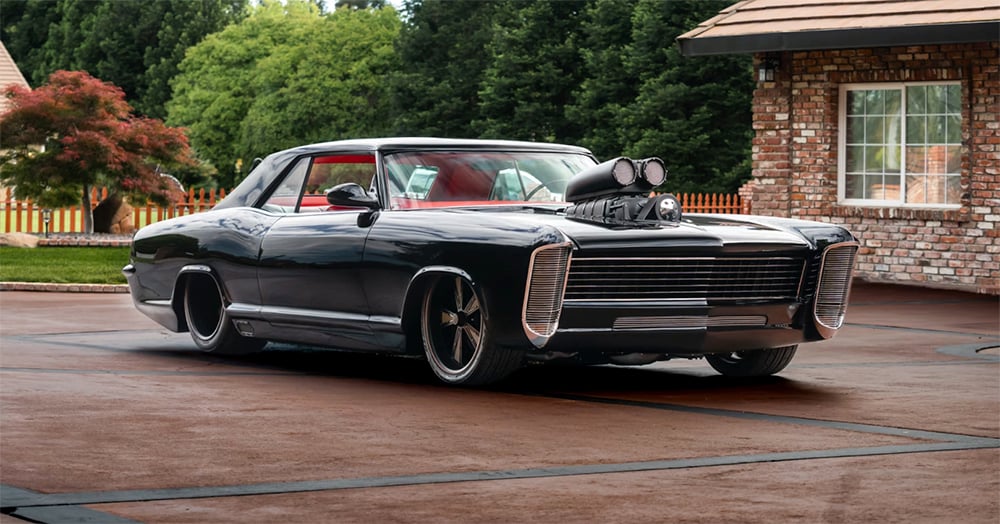
Above: 1965 Buick Riviera restomod (sold for $275,000 at Mecum Monterey 2026)
For American muscle enthusiasts, Mecum has long provided Monterey Car Week with a distinctly Detroit soundtrack.
While several of the peninsula's other major auction houses tend to lean heavily toward European sports cars, exotics, competition machinery, supercars, hypercars and blue-chip classics, Mecum traditionally brings the horsepower wars to Monterey in force.
Hemi Mopars, Shelby Mustangs, Boss Fords, Camaros, Chevelles and other American heavy hitters fill a niche that's unmistakably Mecum—and unmistakably muscle.
The numbers help explain Mecum's outsized presence. At Monterey 2026, Mecum offered nearly half of all the automobiles consigned among the five major auction companies and sold more cars than any other house.
That's also why our countdown is dominated by Mecum results. We didn't set out to make it that way. We followed the sales.
For this list, we're staying firmly in Classic Industries territory. That means production American muscle and pony cars from the classic era—the kinds of Mustangs, Shelbys, Camaros, Chevelles, Chargers, Barracudas and other machines that Classic Industries customers restore, drive, show and enjoy.
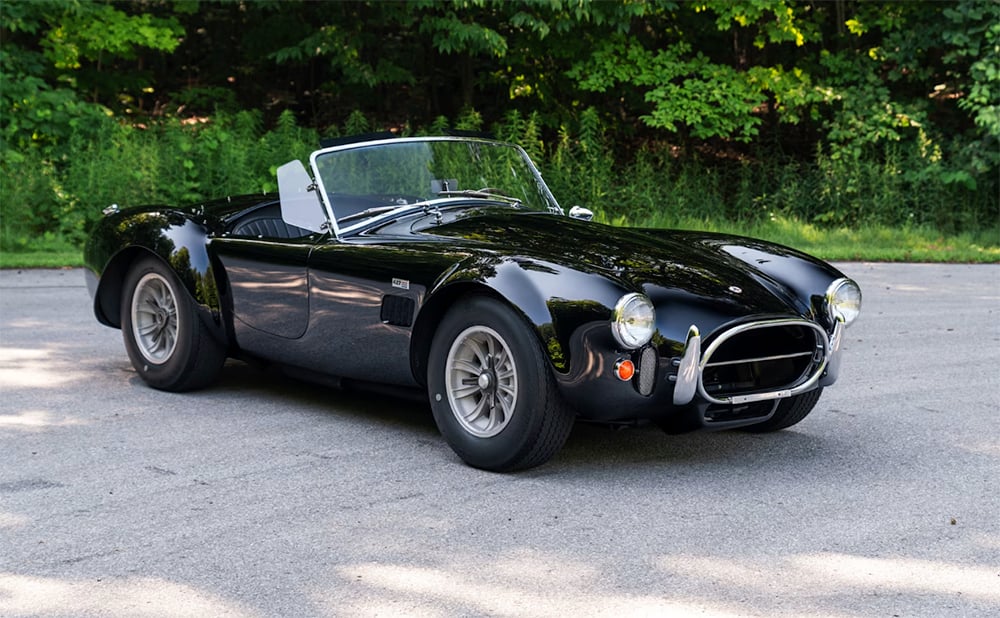
Above: Just because the Cobra is left out of the top selling American muscle car conversation doesn't mean we can't share a photo - it's a 427 big block Ford V8 powered jet black street machine, one of 16 in this seductive hue.
We're deliberately leaving out Cobras, Corvette competition cars, the record-setting Shelby Daytona Coupe and other American sports and racing machinery. Spectacular automobiles? Absolutely. Traditional American muscle cars? That's a different conversation.
We're also counting completed sales only. A spectacular car that attracted a huge high bid but went home with its consignor isn't a sale.
With those ground rules established, fire 'em up.
We're counting down from number 10 to Ground Zero, so 11 cars in total, a Baker's 10 if you will (get it?).
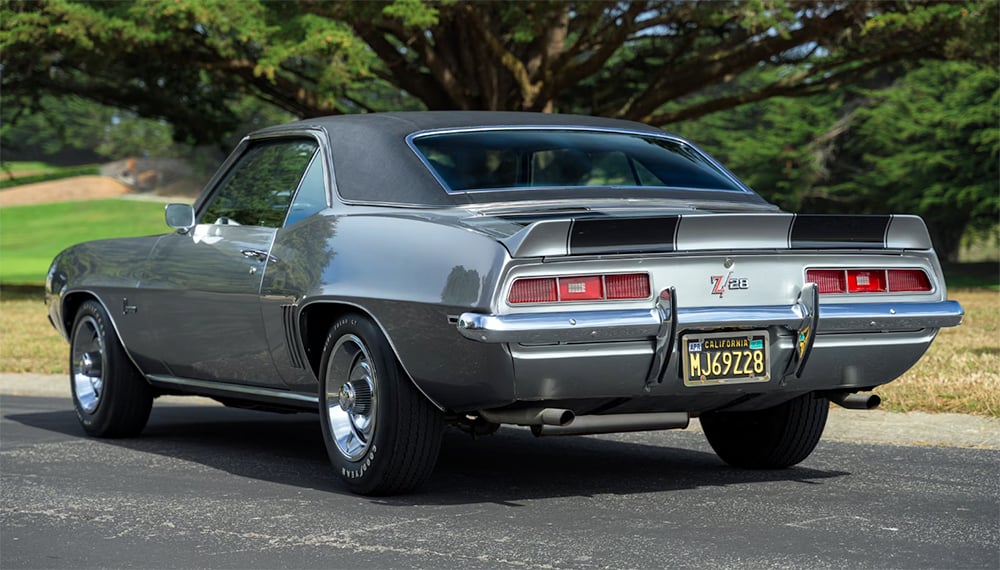
10. 1969 Chevrolet Camaro Z/28 — $84,700
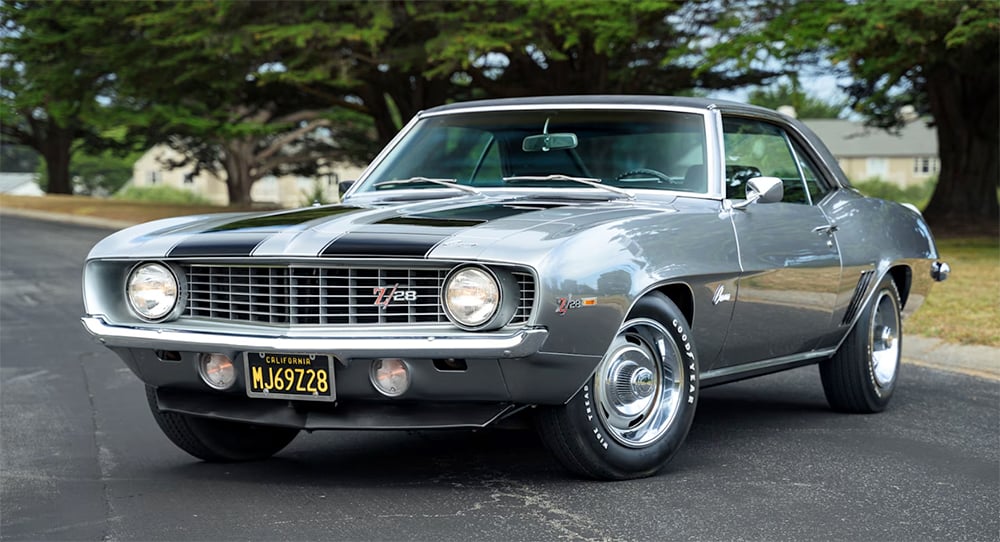
Mecum Monterey 2026 — Lot F18
Few combinations of letters and numbers mean more to Chevrolet enthusiasts than Z/28.
This Cortez Silver 1969 Camaro Z/28 sold for $84,700, and it had the mechanical combination enthusiasts want to see: Chevrolet's legendary 302/290-horsepower small-block, a four-speed manual transmission and Positraction.
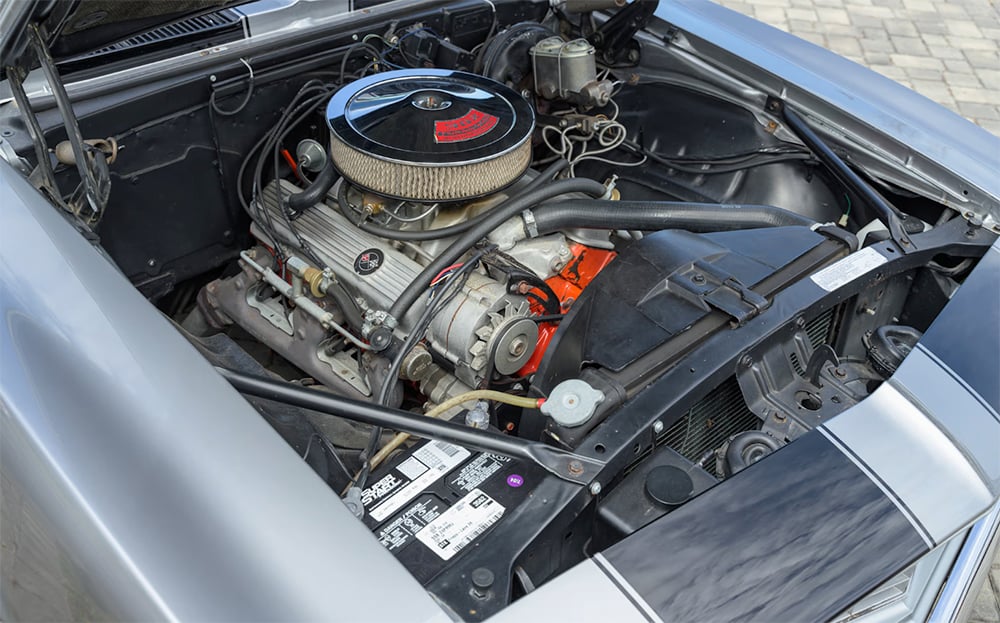
The Z/28 wasn't originally conceived as a boulevard bruiser. Chevrolet created it to compete in the SCCA Trans-American Sedan Championship, where engine displacement was limited to 305 cubic inches.
Chevrolet's solution was brilliant: combine the 4.00-inch bore of the 327 with the 3.00-inch stroke of the 283. The resulting 302-cubic-inch small-block loved rpm and became one of Chevrolet's most charismatic performance engines.
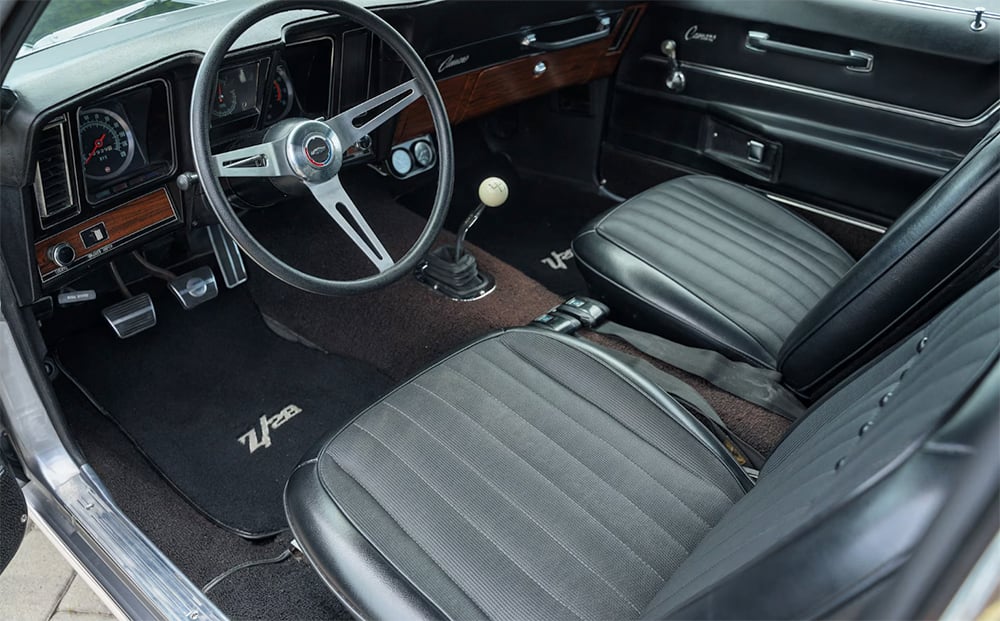
Officially, Chevrolet rated it at 290 horsepower.
Muscle-car enthusiasts have been chuckling about that number for more than half a century.
The '69 Camaro's combination of aggressive styling, racing heritage and screaming small-block personality has made the Z/28 one of the cornerstone cars of the first-generation Camaro market.
At $84,700, this one opens our Monterey Top 10.
9. 1968 Shelby GT350 — $106,700
Mecum Monterey 2026 — Lot S38
At number nine, we cross the six-figure line.
A 1968 Shelby GT350 sold for $106,700. The car showed approximately 16,000 miles on its odometer and was listed as an original or highly original example with a manual transmission.
By 1968, the Shelby Mustang had evolved considerably from the barely civilized GT350s of 1965.
Those earliest cars had been raw, noisy machines closely connected to Shelby's competition program. By 1968, the GT350 had matured into more of a high-performance grand touring car, but there was still no mistaking it for an ordinary Mustang.
Shelby styling, performance hardware and—most importantly—that Shelby name gave the GT350 a character all its own.
The market clearly still understands the difference.
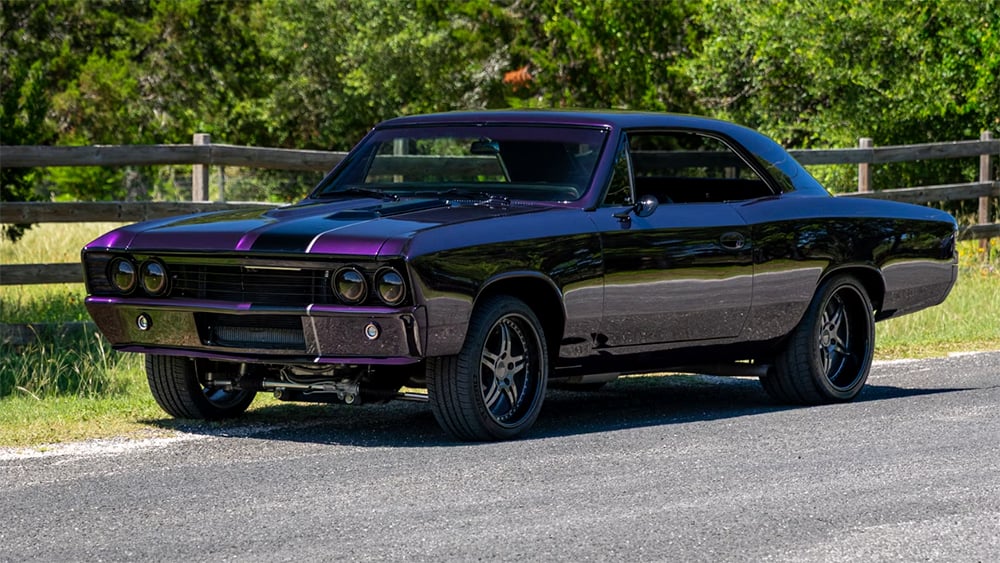
8. 1967 Chevrolet Chevelle SS396 — $110,000
Mecum Monterey 2026 — Lot S89
Now we're getting into Detroit muscle in its purest form.
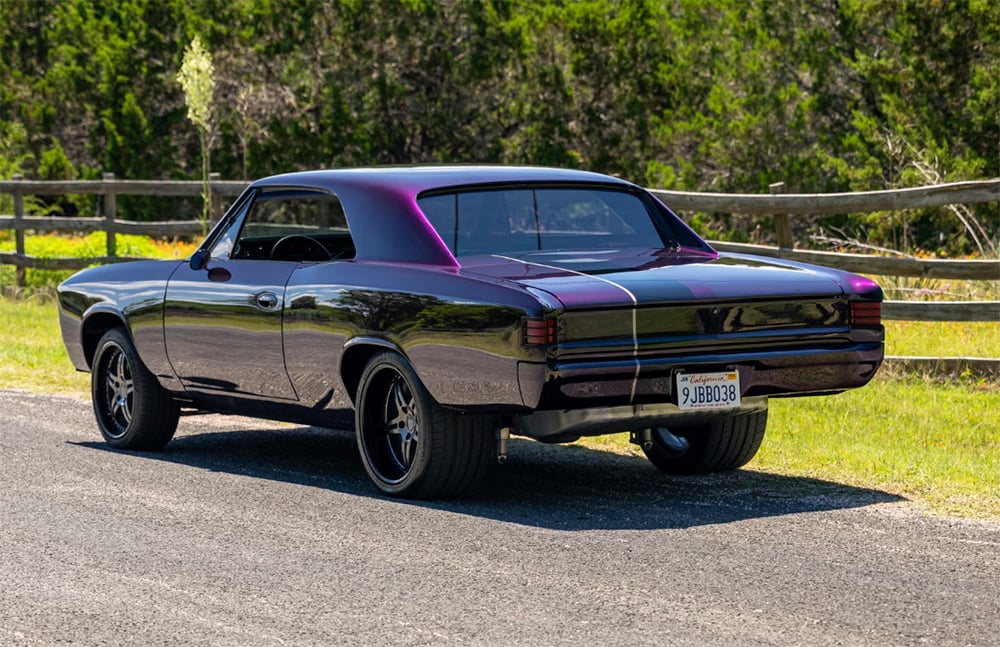
This 1967 Chevrolet Chevelle SS396 brought $110,000. The car was categorized as a custom example and was equipped with a manual transmission.
There's something wonderfully straightforward about an SS396 Chevelle.
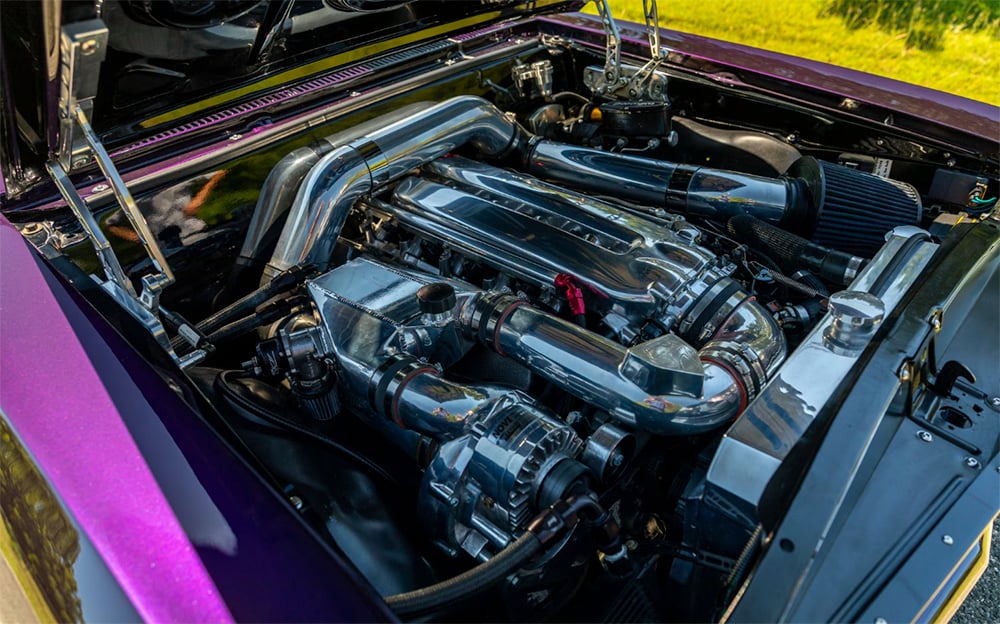
Take Chevrolet's handsome intermediate A-body, stuff a big-block between the front fenders, put a stout transmission behind it and let the rear tires worry about what happens next.
By 1967, Chevrolet had refined the Super Sport Chevelle into one of the best-looking muscle cars of the decade. Its tunneled rear window, muscular rear quarters and restrained SS identification produced a car that looked aggressive without resorting to visual theatrics.
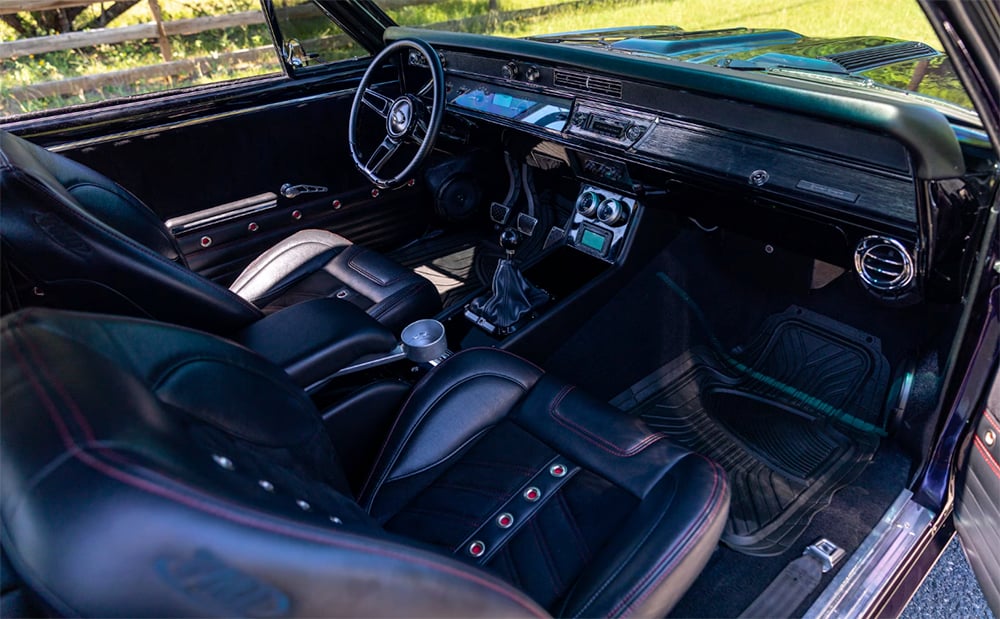
The SS396 also represents the classic muscle-car formula about as perfectly as anything Detroit ever built: a relatively affordable intermediate-size automobile carrying an engine far more powerful than anyone strictly needed for commuting to work.
That's precisely why we love them.
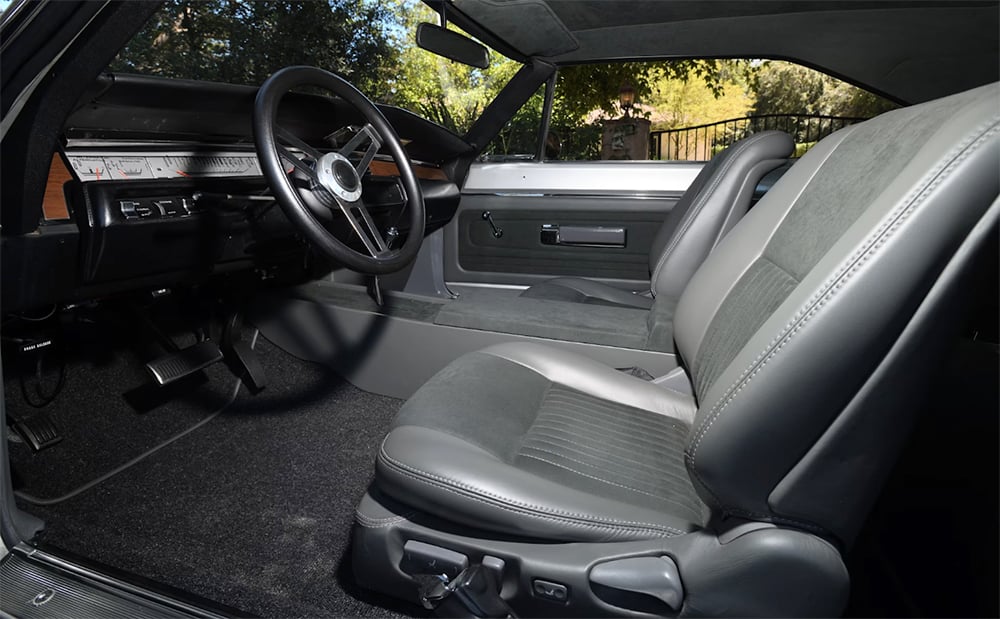
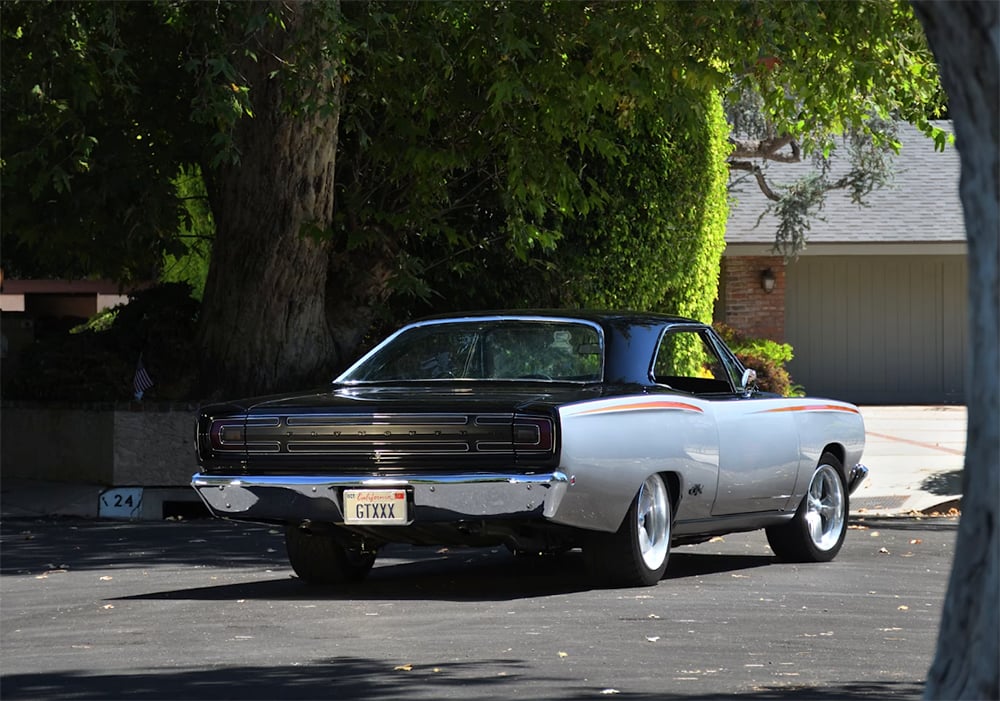
7. 1968 Plymouth GTX — $110,000
Mecum Monterey 2026 — Lot S23
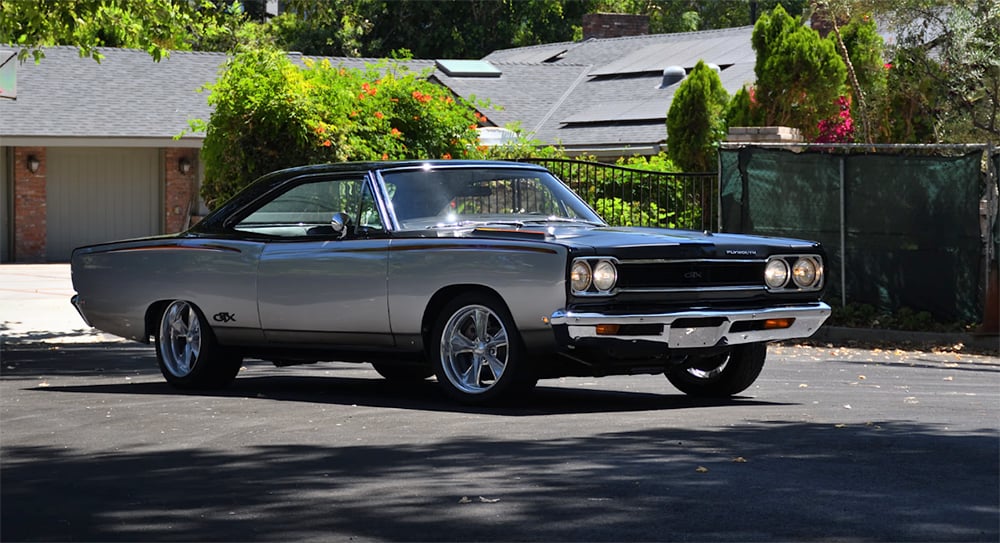
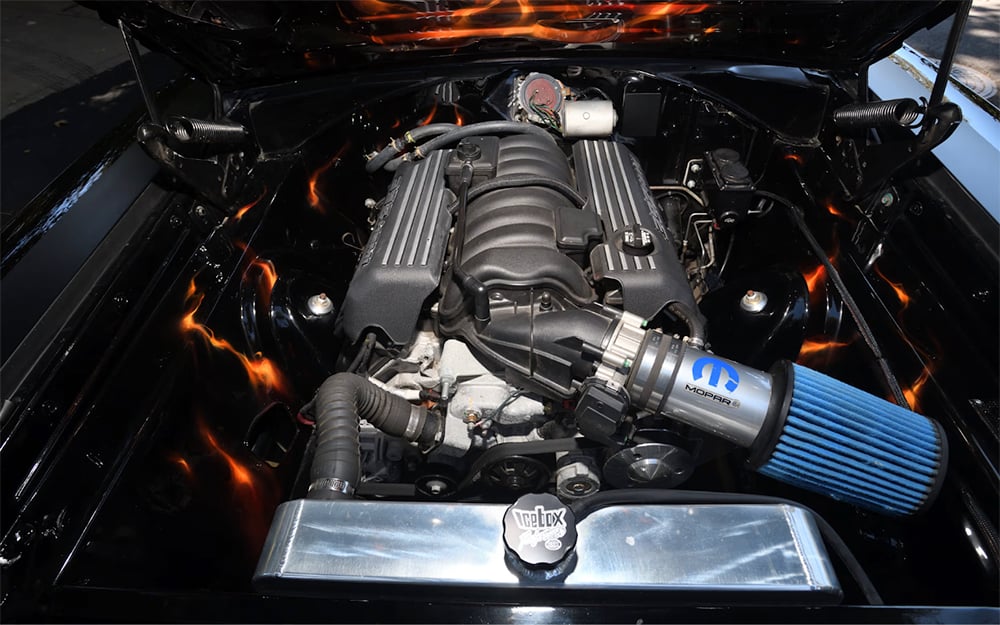
Tied with the Chevelle at $110,000 was Plymouth's upscale muscle machine, the 1968 GTX.
This example was categorized as modified and used an automatic transmission.
Plymouth marketed the GTX as something of a gentleman's muscle car.
Don't confuse "gentleman" with "timid."
The GTX took Plymouth's midsize B-body platform and combined serious performance with a higher level of trim and equipment. The redesigned 1968 body was particularly successful, with Coke-bottle contours, broad rear haunches and one of the cleanest shapes to emerge from Chrysler styling during the era.
Plymouth's Road Runner was the stripped-down bargain bruiser.
The GTX was the guy wearing a nice jacket who could still knock your block off.
More than half a century later, collectors remain very fond of that combination.
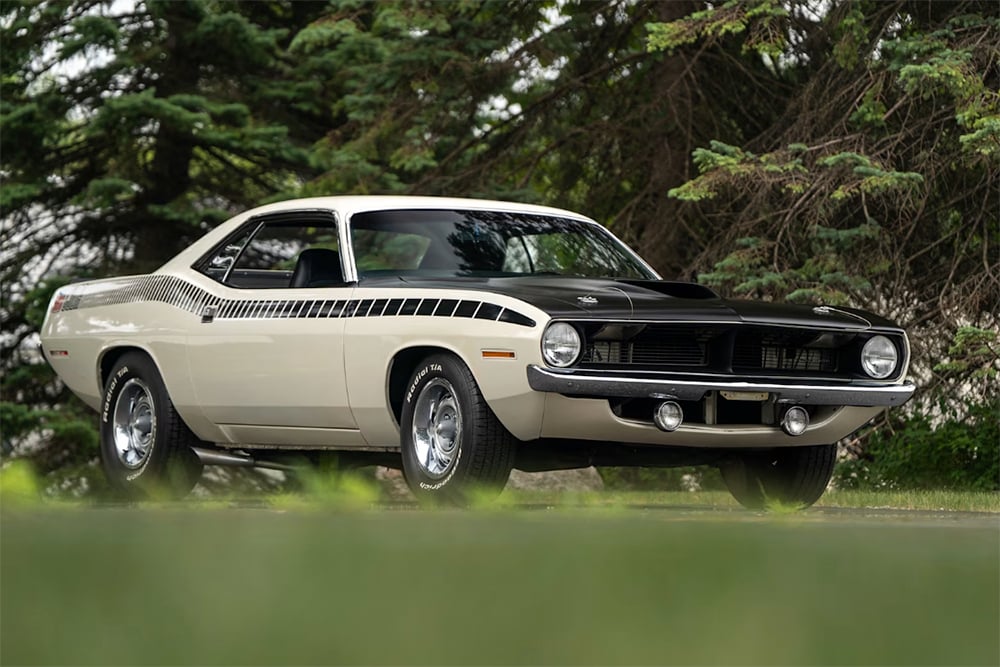
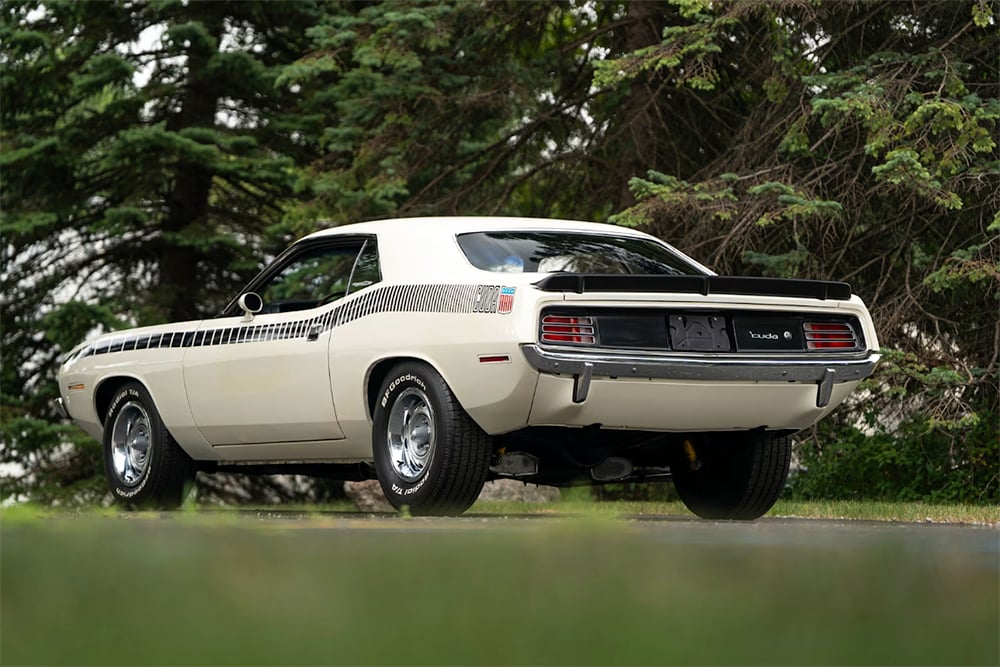
6. 1970 Plymouth AAR 'Cuda — $121,000
Mecum Monterey 2026 — Lot S145
Number six brings us one of the most colorful characters of the entire muscle-car era.
A 1970 Plymouth AAR 'Cuda sold for $121,000. The car was listed as an original or highly original example, showed approximately 66,000 miles and was equipped with an automatic transmission.
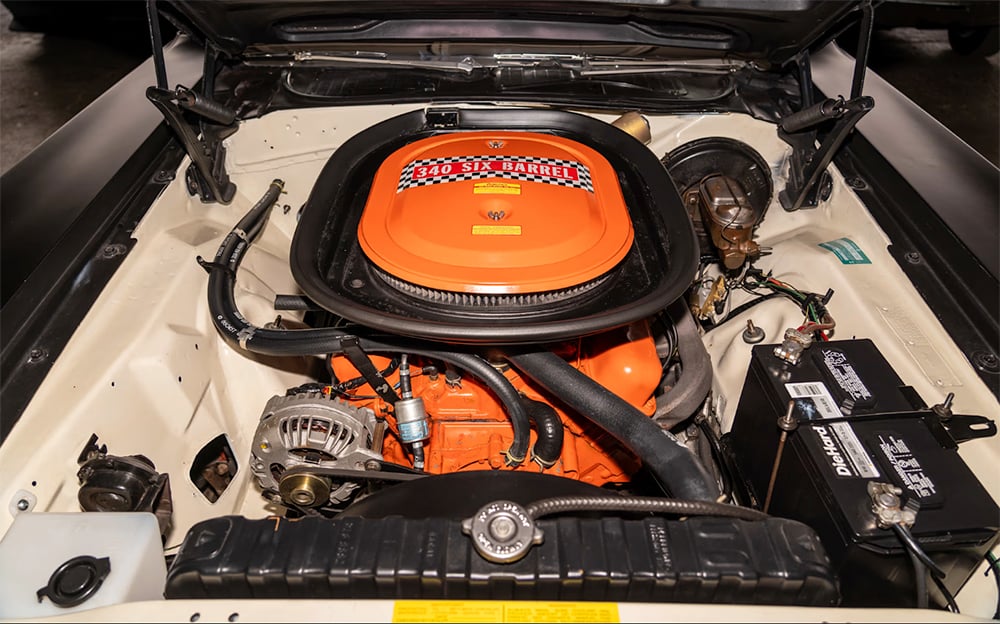
The AAR 'Cuda exists because Plymouth wanted to go road racing.
Created in connection with Plymouth's participation in the SCCA Trans-Am series and Dan Gurney's All-American Racers, the street-going AAR used Chrysler's 340 small-block topped by the unforgettable Six-Barrel induction system—three two-barrel carburetors sitting beneath that distinctive hood.
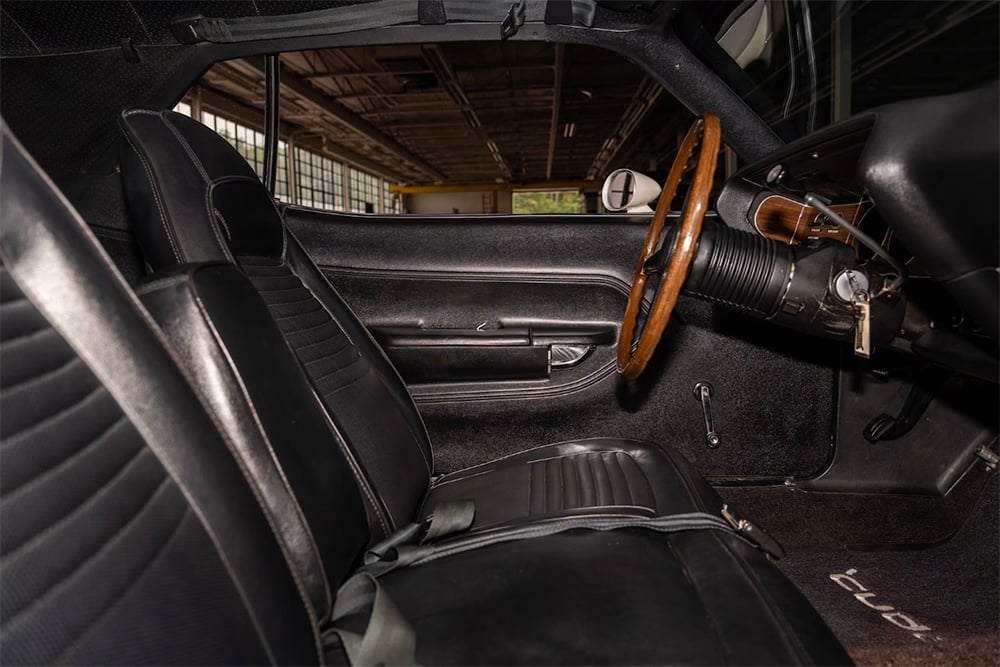
Then Plymouth added side-exit exhaust, bold graphics, staggered tire sizes and enough visual attitude to make the AAR look fast while sitting at a stoplight.
Unlike some of Detroit's nose-heavy big-block bruisers, the AAR relied on a potent small-block and a more balanced package.
It was different.
And in the collector-car world, different often becomes desirable.
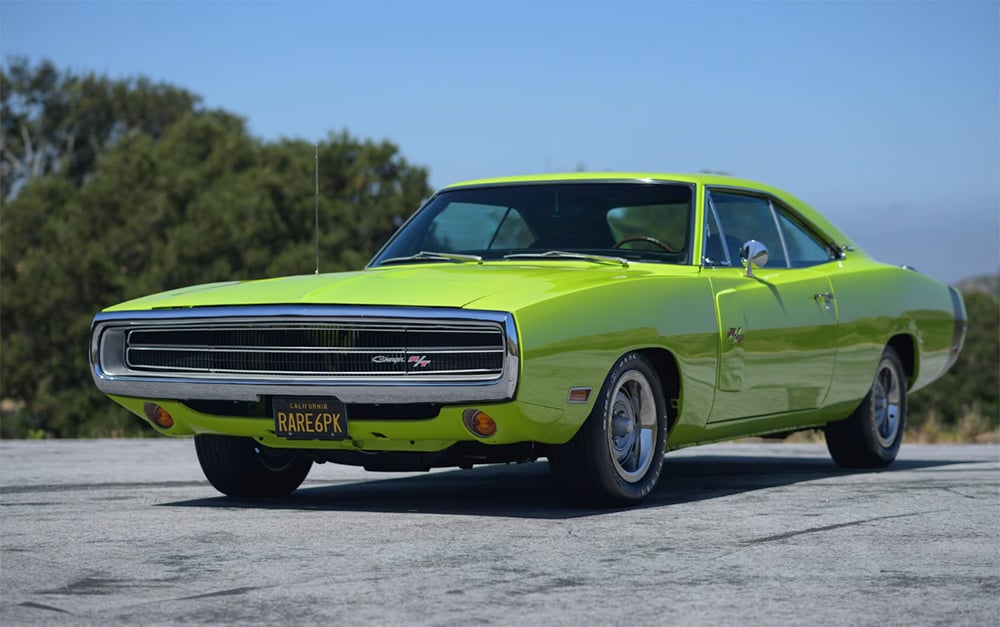
5. 1970 Dodge Charger R/T 440 Six Pack — $137,500
Mecum Monterey 2026 — Lot F117
If the AAR 'Cuda represented Mopar showing off its road-racing personality, this Charger represented Chrysler reaching for a much larger hammer.
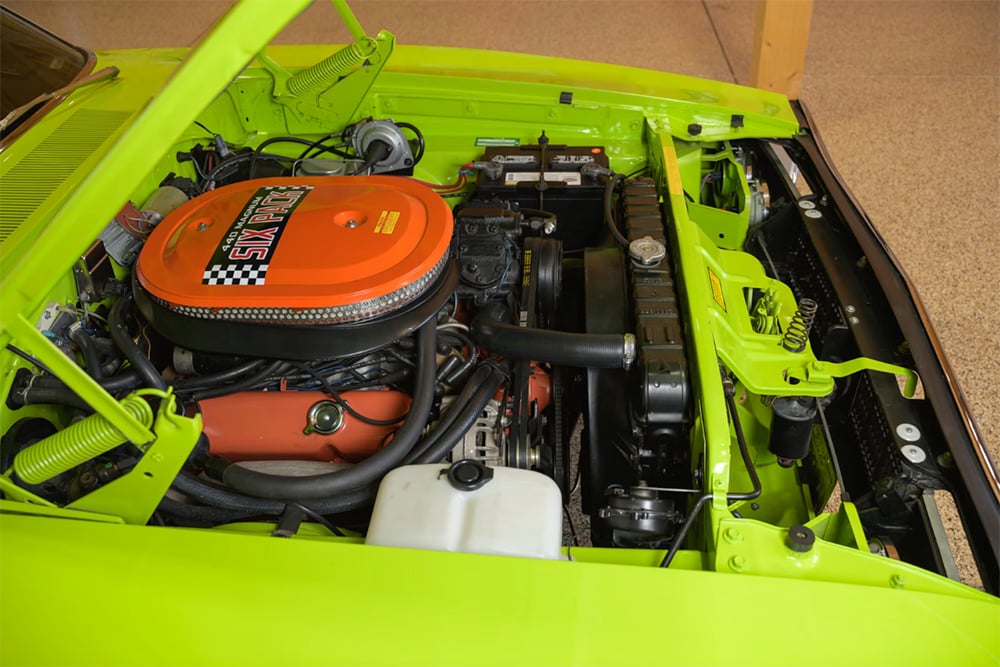
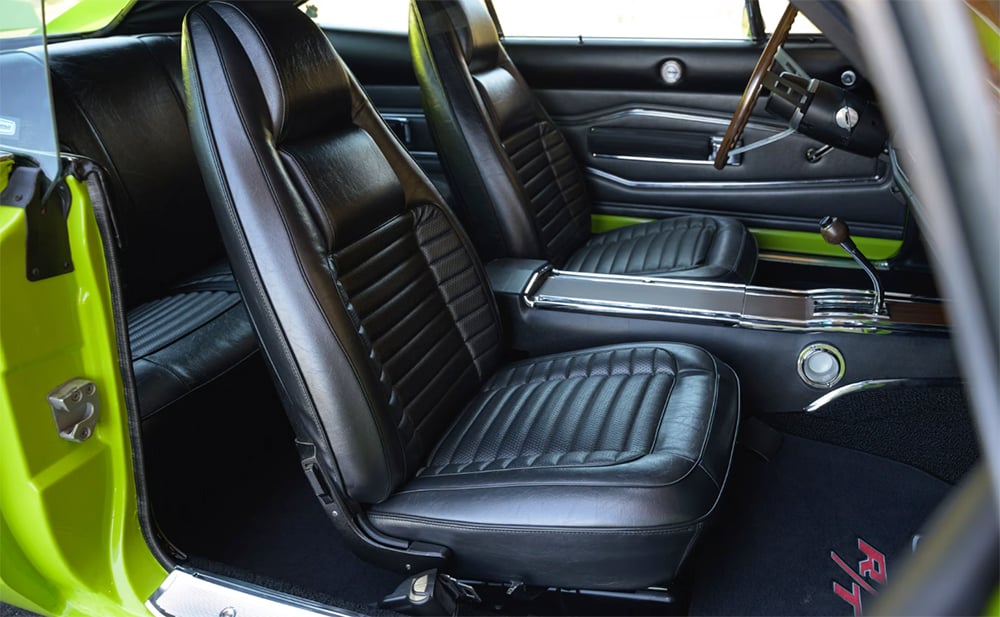
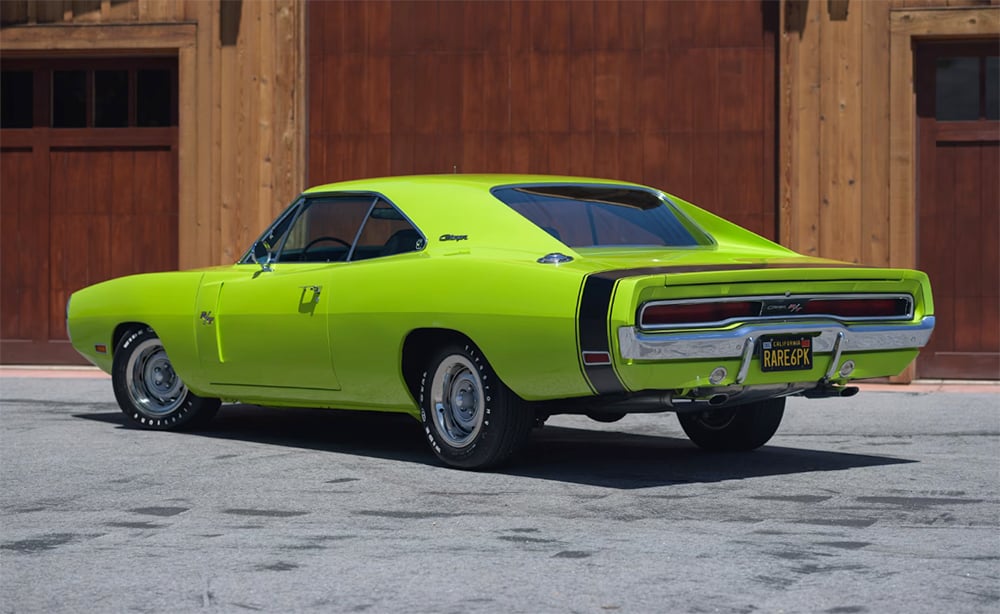
This 1970 Dodge Charger R/T sold for $137,500. Its VIN identifies it as a V-code R/T, and the car was listed as an original or highly original example with an automatic transmission.
In Mopar language, that V in the VIN is important.
Very important.
The V-code signified Chrysler's formidable 440 Six Pack, with three Holley two-barrel carburetors feeding 440 cubic inches of big-block torque.
The factory rated the combination at 390 horsepower.
Anyone who has experienced a properly sorted Six Pack Mopar knows the horsepower number tells only part of the story. It's the tidal wave of torque—and what happens when those outboard carburetors join the party—that gives these engines their personality.
Then wrap the whole package in the spectacular second-generation Charger body.
Long hood. Flying-buttress roofline. Hidden headlights. Coke-bottle flanks.
It's one of those rare automobiles where styling and mechanical aggression seem perfectly matched.
At $137,500, Monterey bidders clearly agreed.
4. 1970 Ford Mustang Mach 1 Twister Special — $170,500
Mecum Monterey 2026 — Lot F152
Here's where our countdown gets wonderfully obscure.
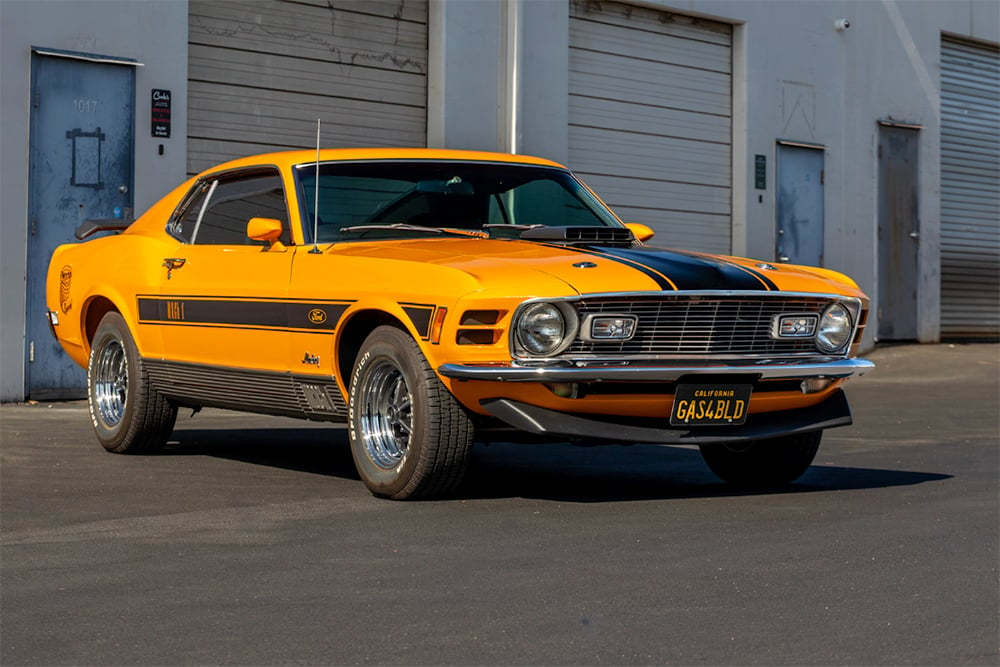
This Grabber Orange 1970 Mustang Mach 1 Twister Special sold for $170,500. It was a 351-powered automatic example, VIN 0F05M118883.
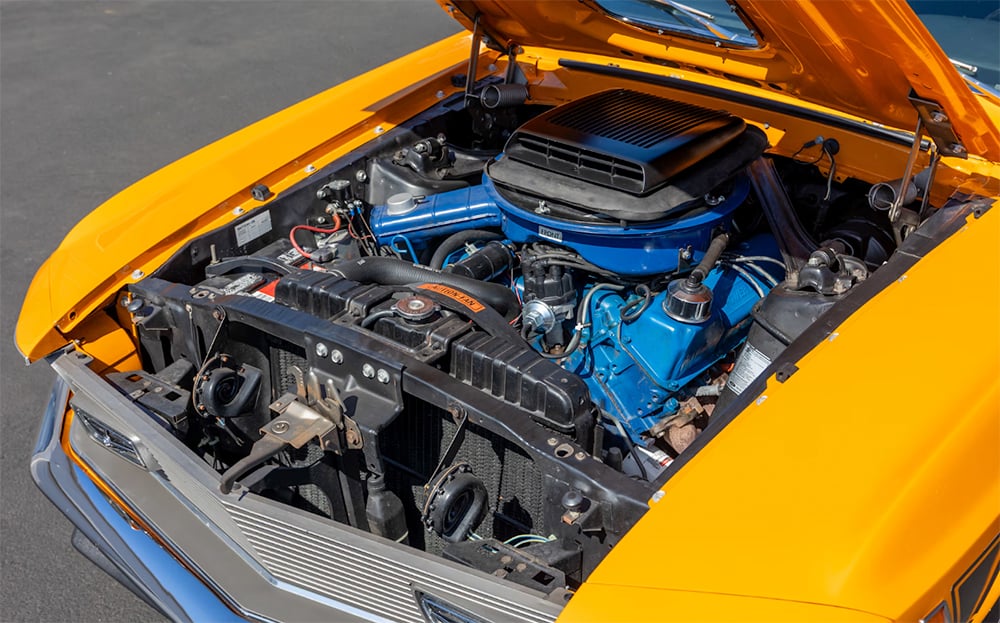
Only 96 Mustang Mach 1 Twister Specials were produced, all painted Grabber Orange and intended for Ford's Kansas City sales district. Forty-eight received 428 Super Cobra Jet power and 48 were built with 351 engines. This particular Mustang is one of only 39 351/automatic examples produced.
And this is precisely the sort of muscle-car history that makes the hobby so much fun.
Just when you think you know every Mustang Ford produced, along comes another district promotion, dealer special or obscure factory combination.
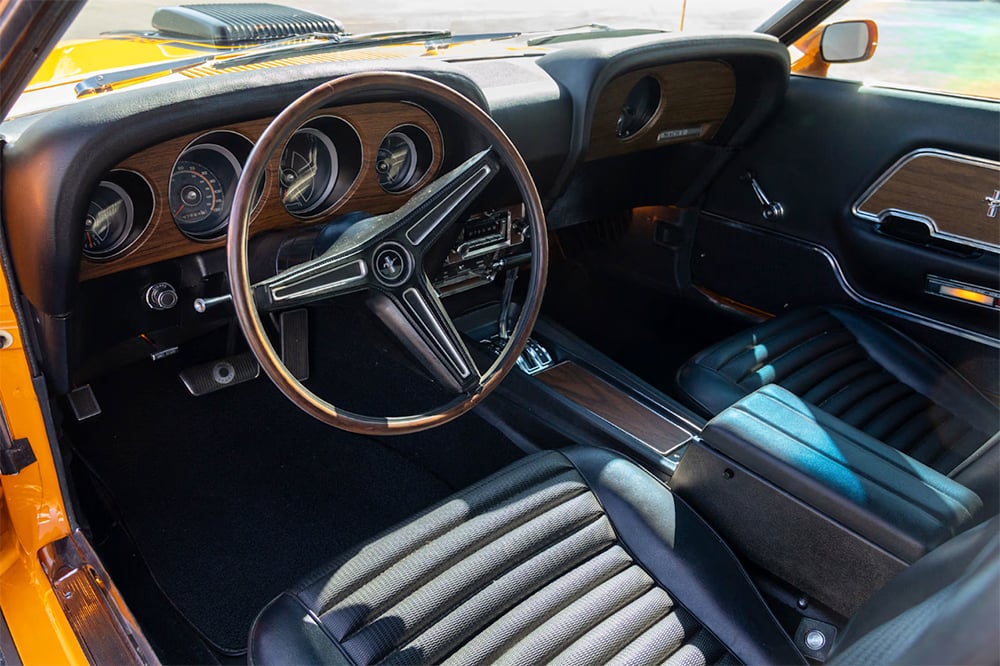
Twister Specials received unmistakable graphics, and the Grabber Orange paint certainly didn't hurt their ability to attract attention.
Regional specials occupy a fascinating corner of Ford history because their rarity wasn't necessarily the result of some exotic engineering program. Sometimes it was simply a group of dealers wanting something special to put on their showroom floors.
Fifty-six years later, somebody paid $170,500 for this one.
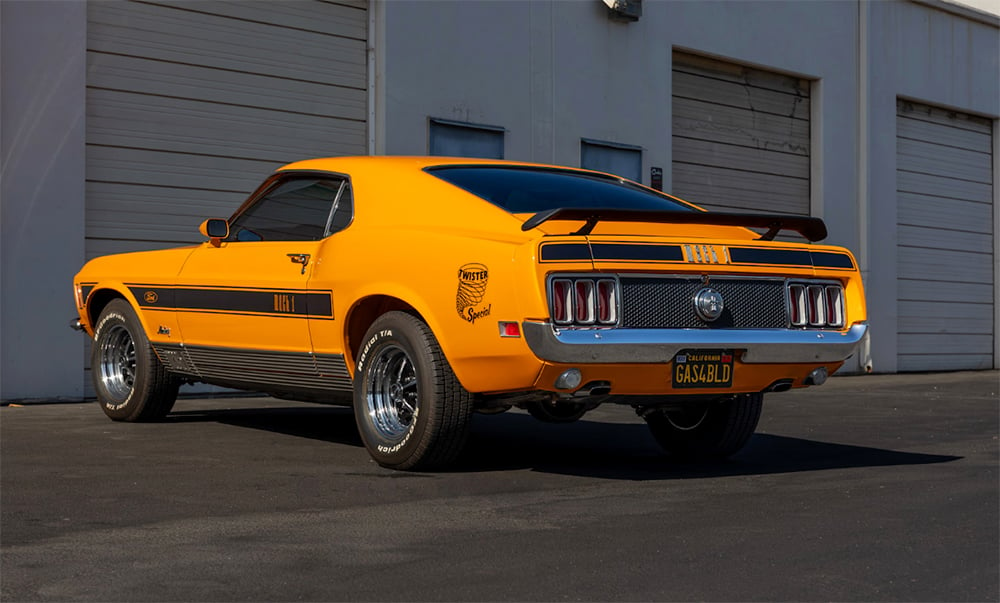
Apparently, the promotion worked.
3. 1967 Shelby GT500 — $308,000

Mecum Monterey 2026 — Lot F113
Now we've entered serious money.
This 1967 Shelby GT500 sold for $308,000. The car, Shelby No. 02502, was listed as an original or highly original example with a manual transmission and approximately 47,000 miles showing.

The first-year GT500 marked an important shift in Shelby Mustang history.
The original GT350 demonstrated what Shelby American could accomplish with Ford's small-block Mustang. But Detroit's horsepower war was escalating quickly, and by 1967 big-block power had become increasingly difficult to ignore.
Shelby didn't ignore it.

The GT500 brought Ford FE big-block muscle to the Shelby Mustang formula, creating a machine that was less of a raw road racer than the original GT350 but tremendously capable as a high-speed grand touring car.
And then there's the styling.

The '67 Shelby fastback remains one of those automobiles that looks almost impossibly right from every angle: extended nose, hood scoops, driving lamps, sculpted rear bodywork and that glorious Mustang fastback roofline.
At $308,000, Shelby No. 02502 demonstrated that collectors still place first-year GT500s firmly in blue-chip muscle-car territory.

Yet another '67 GT500 brought even more.
2. 1967 Shelby GT500 — $324,500

Mecum Monterey 2026 — Lot F111
Yes, another 1967 GT500.
But this Brittany Blue Shelby had quite a story.
Shelby No. 00948 sold for $324,500. Mecum described it as one of 200 four-speed-equipped 1967 GT500s painted Brittany Blue. It retains its original window sticker and carries the Competition Handling Package, power steering and power disc brakes.
The car was found and restored by Dennis Collins and his Collins Brothers Jeep crew and was featured on Collins' Coffee Walk YouTube series.
Then there's what's under the hood.

Instead of the GT500's customary 428, this Shelby carries a 427-cubic-inch V8, backed by its factory four-speed manual transmission.
Combine Brittany Blue paint, four-speed desirability, documentation, equipment, a known restoration story and the mystique of a 427-powered Shelby Mustang, and you've got the ingredients for a serious auction result.

It brought $16,500 more than the other GT500 in our countdown.
Two 1967 GT500s selling for more than $300,000 at the same Monterey auction sends a fairly clear message about the continuing strength of the Shelby Mustang market.
But neither Shelby took the crown.

For that, we need one enormous Ford engine, a very large hood scoop and two of the most intimidating words ever attached to a Mustang.
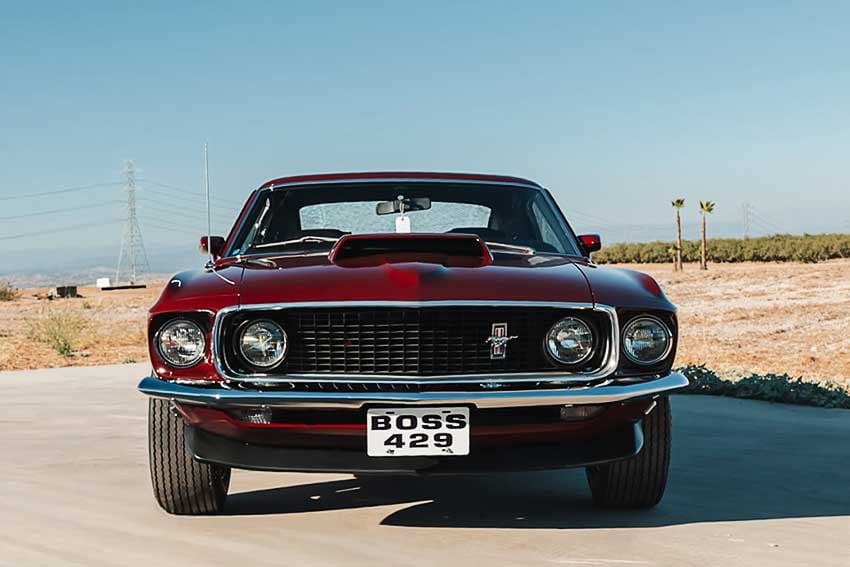
1. 1969 Ford Mustang Boss 429 — $506,000
Mecum Monterey 2026 — Lot F53

The Boss is indeed the boss.
A magnificent Royal Maroon 1969 Boss 429 Mustang commanded $506,000, making it the highest-selling traditional American muscle car in our Monterey Car Week 2026 countdown.
And this wasn't merely a Mustang wearing an expensive decal package.

KK No. 1870 received a nut-and-bolt rotisserie restoration and retains its matching-numbers 429/375-horsepower V8 and matching-numbers four-speed manual transmission. It also carries a 3.91 Traction-Lok rear axle, Competition Suspension, power steering and power front disc brakes.
The Boss 429 exists because Ford had a problem.
Actually, Ford had a NASCAR problem.
The company wanted to homologate its massive new 429 engine for competition, which required production installations.
The Mustang became the unlikely host.

There was only one complication: the gigantic semi-hemispherical-head 429 didn't exactly slip between the Mustang's shock towers like a 289.
Kar Kraft in Brighton, Michigan, handled the surgery necessary to make everything fit. The front suspension and shock-tower area required significant modification, and the battery migrated to the trunk.
The result was one of the most extraordinary production Mustangs Ford ever unleashed.
The Boss Nine didn't need wild stripes or garish graphics to announce what it was.
That enormous hood scoop did most of the talking.

Then you noticed the understated BOSS 429 lettering on the front fenders.
Those who knew, knew.
This particular Boss was built May 28, 1969, and sold new at Shiretown Motors in Plymouth, Massachusetts. Royal Maroon paint over a black interior gives the car an almost restrained appearance—at least until you open the hood.

Half a century later, somebody raised a paddle enough times to spend $506,000 for the privilege of putting KK No. 1870 in the garage.
That's serious money.
It's also a serious Mustang.

And at Monterey Car Week 2026, the Boss 429 lived up to its name.
Ground 0: 1969 Dodge Hemi Charger Daytona — The King of Monterey Muscle
Mecum Monterey 2026 - Lot F94

When the hammer fell on this spectacular 1969 Dodge Hemi Charger Daytona, it didn’t merely change hands—it claimed the crown as the No. 1-selling American muscle car of 2026 Monterey Car Week with a $1,320,000 sale. Considering the caliber of machinery that descends on the Monterey Peninsula each August, that distinction says plenty about the enduring desirability of Chrysler’s outrageous, winged warrior.

Any genuine 1969 Hemi Charger Daytona occupies rarefied territory in the muscle car hierarchy, but this particular example takes exclusivity several steps further. Mopar expert Dave Wise described the Daytona as a “semi-survivor,” and for good reason. It retains its original drivetrain and original interior and has received just one repaint in its exceptionally rare factory color. Even more remarkably, original paint remains visible within the engine compartment.

Of the mere 70 Hemi-powered Charger Daytonas produced for 1969, only 39 are believed to survive today, and this car is reportedly one of just two known examples finished in F6 Spring Green Metallic. That combination of Hemi power, Daytona aerodynamics, originality, documentation, and extraordinary color makes this one very special piece of Mopar history.

Originally sold through Vern Holmes, Inc. in Long Beach, California, the Daytona is documented by an MMC Detroit inspection performed by noted Mopar authority Dave Wise. Beneath that unmistakable aerodynamic bodywork resides the prize every serious Mopar collector wants to see: its matching-numbers 426 Hemi V8, factory rated at 425 horsepower.
The legendary Elephant Motor is topped by dual Carter AFB four-barrel carburetors and wears the Hemi's signature black valve covers. Behind it is Chrysler's rugged A727 TorqueFlite automatic transmission. The Daytona was also equipped with the A32 Super Performance Axle Package, bringing with it a 4.10-geared Dana 60 Sure Grip rear differential, 26-inch radiator, maximum-cooling equipment, and power front disc brakes. Power steering adds a welcome measure of civility to an otherwise uncompromising muscle machine.

Then there's the body—the feature that transformed the Charger Daytona from an already formidable street machine into one of the most recognizable American automobiles ever built.
Its gorgeous F6 Spring Green Metallic finish is contrasted by the towering black Daytona-lettered rear wing. Up front sits the pointed aerodynamic nose cone with hood pins, while fender-top air extractors, chrome A-pillar wind deflectors, and the special flush-mounted rear window complete the aero package Chrysler developed in its relentless pursuit of NASCAR supremacy.
Inside, the Daytona retains its original black bucket-seat interior, including the center console with wood-grain trim and chrome shifter. Other factory appointments include variable-speed windshield wipers, simulated wood-grain steering wheel, in-dash Tic-Toc-Tach, and console-mounted vacuum gauge. A flip-open fuel cap, chrome exhaust tips, Hemi identification tags, and dual outside mirrors provide additional period-correct details.
Completing the look are highly desirable 1969 Kelsey-Hayes “recall” wheels wrapped in redline tires—a fitting finishing touch for one of the most visually outrageous machines ever unleashed during Detroit's horsepower wars.

Every authentic Charger Daytona is special. A 426 Hemi Daytona resides on another level entirely. Add matching-numbers power, its original interior, extensive documentation, remarkable preservation, and one-of-two-known F6 Spring Green Metallic rarity, and the result is the kind of automobile that can command a Monterey auction room.
And in 2026, that's exactly what it did.
Among the Camaros, Corvettes, Mustangs, Shelbys, Mopars, and other blue-chip American performance machines crossing the auction blocks during Monterey Car Week, this winged Hemi emerged on top.

The 1969 Dodge Hemi Charger Daytona stands as the No. 1-selling American muscle car of 2026 Monterey Car Week—a fitting title for one of the most audacious automobiles ever created during the golden age of Detroit muscle.
What Monterey 2026 Told Us About American Muscle

Above and below: 1936 Ford roadster with a Hilborn fuel-injected 1958 Chrysler 392 cubic inch V8 Hemi engine - This perfectly executed hot rod sold at Mecum Monterey 2026 for $412,500!
Perhaps the most interesting part of these results isn't simply the prices.
It's what collectors were willing to pay premiums for.

Our Top 10 includes Ford, Chevrolet, Dodge, Plymouth and Shelby machinery. There are big-blocks and small-blocks, four-speeds and automatics, homologation specials, regional promotional cars and some of the most recognizable names ever to emerge from Detroit.
And despite Monterey's reputation as the playground of Ferraris, Bugattis, prewar coachbuilt masterpieces and European competition cars, American muscle continues to command serious attention.

Mecum remains the place where that side of Monterey Car Week is most visible. Its 2026 sale offered 521 lots and recorded 324 sales totaling approximately $111.6 million. Across all five major Monterey auctions, CLASSIC.COM recorded 850 completed sales totaling approximately $751.3 million.
The muscle-car results also reinforce something longtime collectors already understand.

Above: 1967 Ford Bronco with a fuel-injected 289 cubic inch V8 that's backed by a five-speed manual transmission - This Goes Over Any Terrain (GOAT) Bronco sold for $137,000 at Mecum Monterey 2026.
The story attached to the sheet metal matters.
A Mustang is desirable.
A documented Boss 429 is something else entirely.
A Mach 1 is a great collector car.
A Grabber Orange Twister Special built specifically for Ford's Kansas City sales district gives collectors another layer of rarity and history to chase.
A 440 Charger R/T is serious machinery.
Put three two-barrel carburetors on that 440 and stamp a V into the VIN, and you've entered another part of the Mopar food chain.
Then there are the details collectors obsess over: matching-numbers drivetrains, factory colors, original documentation, unusual option combinations, restoration quality, ownership history and provenance.

Above: This 1949 Dodge Power Wagon with a nut and bolt ground up restoration sold for $99,000 at Mecum Monterey 2026.
All of it matters.
But desire matters most.
Because when two determined collectors decide the same automobile absolutely, positively needs to occupy the empty space in their garage, an auctioneer's job becomes considerably easier.
The rest of us get to enjoy the show.
And maybe that's what makes watching the muscle cars cross the block during Monterey Car Week so entertaining.
The Ferrari crowd can debate which shade of Rosso is correct. The hypercar guys can discuss carbon-fiber tubs, active aerodynamics and how many electric motors are helping the internal-combustion engine.

Above and below: A 1965 Corvette 396 cubic inch big block V8 powered and Muncie M20 four-speed manual backed transmission with gobs of historical paperwork, including:
- 28,512 miles documented with copy of title and letter from second owner
- Late production date of July 6, 1965
- Breakdown of all codes and numbers (VIN, engine, trim tag, transmission, differential, parts, etc.) included
sold at Mecum Monterey 2026 for $121,000

We'll be over here talking about Holleys, Hemis, Shakers, Six Packs, four-speeds, Positraction, Traction-Lok and whether Chevrolet was fooling anybody when it claimed that 302 made only 290 horsepower.
More than half a century after Detroit's horsepower wars reached their zenith, these machines aren't merely used cars anymore.
They're rolling pieces of American automotive history.
And Monterey Car Week 2026 proved once again that collectors are willing to pay handsomely for the very best examples.
Thankfully, plenty of us still believe that history sounds best through a pair of mufflers with a big-block V8 doing the talking or a small block V8 singing strong with perfect pitch through those forward manually shifted gears.
Check Out the Bullit Stunt Car (#558) Interview & Article

Above: 1968 Bullitt Mustang stunt car #558 (photo courtesy of DBS)